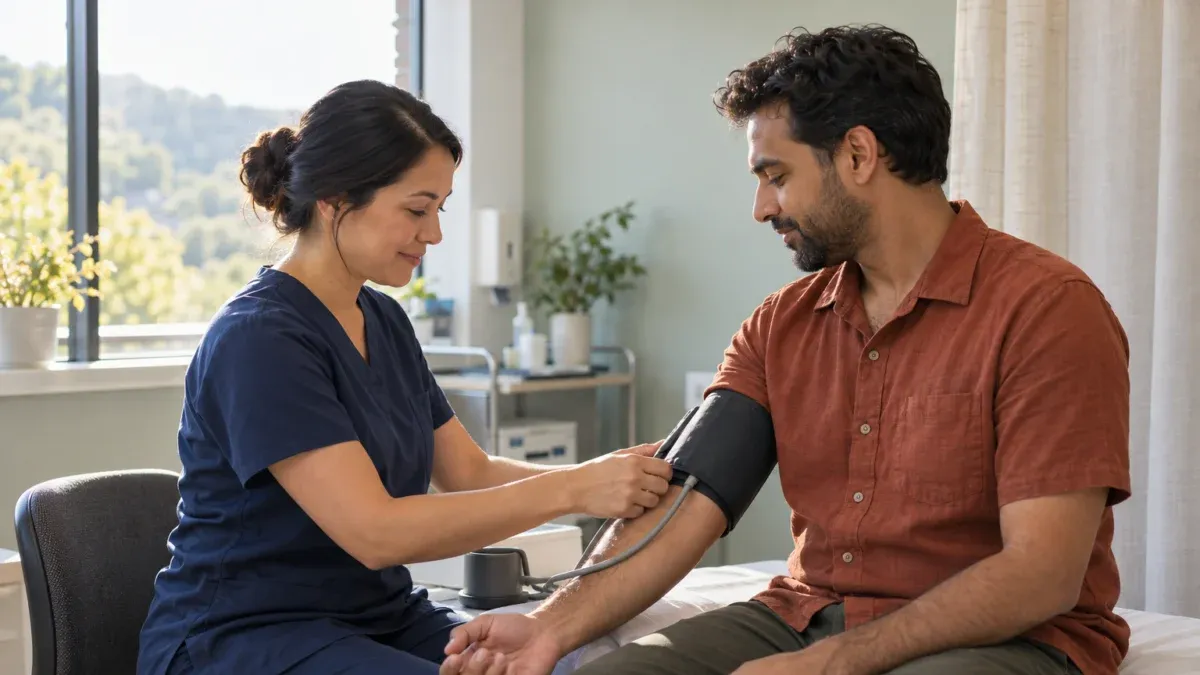
New Zealand visa medical requirements depend on your visa category, intended stay, health circumstances and previous evidence. You may need a medical examination, a chest X-ray, both or neither. Check the correct route and timing before paying a clinic: an upfront examination is not the starting point for every application.
Official guidance checked November 2, 2026. This guide explains the immigration evidence process; your panel physician handles clinical questions and INZ decides the visa application.
Start with INZ’s medical evidence guidance, then use your visa’s health section and any instructions sent through Immigration Online. A friend’s checklist can concern a different category, age or travel history.
Which medical evidence does your visa need?
INZ distinguishes a general medical certificate, a limited medical certificate and a chest X-ray certificate. These are not interchangeable. A limited examination is a category-specific option, not a cheaper package applicants can choose for themselves.
| Application route | What to check | Practical next step |
|---|---|---|
| Standard Visitor Visa | Length of stay, TB-related history and individual health questions | Read the health section and respond to any INZ request |
| Fee Paying Student Visa | Student-specific exceptions and possible X-ray requirements | Use student rules rather than a generic long-stay checklist |
| Accredited Employer Work Visa | The application’s health questions and any requested examination | Keep the request letter and NZHR ready for the clinic |
| Residence application | Category-specific certificate type, timing and previous evidence | Check the residence category before arranging upfront evidence |
| Other temporary or special categories | The particular visa’s health instructions | Do not assume visitor, student or AEWV timing applies |
The table is a route selector, not a personal medical determination. If an application includes family, consider each person separately; one adult’s examination does not establish everybody’s health evidence.
Visitor visa medical requirements
The standard Visitor Visa health section says that a stay shorter than six months normally does not need a chest X-ray, and one shorter than 12 months normally does not need a medical certificate. INZ can still request evidence. Longer stays and TB-related history need closer checking; these normal thresholds are not unconditional exemptions.
For a visitor joining an international student, our Partner of a Student Visitor Visa checklist puts medical evidence alongside relationship, support and financial requirements. Assess the health questions for the actual duration and history rather than treating the student’s own medical checklist as identical.
When extending a stay, account for time already spent in New Zealand rather than looking only at the next proposed visa. Keep the dates you supplied in the application available when responding to a health request.
Student, work and residence applications
For New Zealand student visa medical requirements, use the Fee Paying Student Visa instructions. Fee-paying students have specific medical exceptions, but may still need chest X-ray evidence or an individually requested examination. Scholarship and other student situations can differ. Our student visa guide covers the wider application.
For a Green List Tier 2 residence application, the Work to Residence preparation guide connects health evidence with the separate employment, wage, English and character requirements.
New Zealand work visa medical requirements also vary by route. The AEWV health instructions say INZ reviews submitted health information and contacts you if new evidence is needed; an examination does not replace the employment requirements in our Accredited Employer Work Visa guide.
For New Zealand residence visa medical requirements, identify the actual residence category. For example, partner residence requires medical and chest X-ray evidence with the application, subject to applicable exceptions and earlier-evidence rules. The correct medical certificate type still matters. See the official partner residence requirements and our partner residence evidence guide for that route.
Should you do the medical before applying?
INZ’s current examination process page says AEWV, visitor and student applicants will be told after submitting if an examination or X-ray is needed. Some other visas require evidence before application. Follow the live application and any case-specific request; clarify conflicting instructions with INZ before ordering tests.
Separate three tasks in your planning: completing the visa application, attending the required appointment, and confirming that the evidence reached the correct case. Booking a clinic slot completes only the middle task. If you receive a deadline, record it immediately and arrange the appointment with enough time for any requested follow-up.
A useful personal record has four dates: application submission, INZ request, clinic appointment and clinic submission. Keep the original request alongside that record. It is easier to resolve a missing-result query with those details than with a payment receipt alone.
When is a chest X-ray required?
TB screening considers country and travel or residence history as well as stay length. INZ’s low-incidence TB country guidance explains the applicable history checks, including accumulated time in countries outside its list during the previous five years. A US, Canadian, British or Australian passport alone does not settle the question.
For the standard Visitor Visa and Fee Paying Student Visa, the dedicated health sections require a chest X-ray for stays over six months when the specified country or previous-five-year travel history applies, subject to the relevant exceptions. In particular, nationality and time in non-listed countries both need checking.
Build a chronological country list before answering: destination, arrival, departure and time spent there. Several separate trips can matter together. Use actual calendar dates rather than rounded recollections such as “about a month,” and check the current official country list instead of an old screenshot.
The operational instructions use a combined three-or-more-month history threshold for the relevant TB risk-factor test. The temporary-entry health instructions also explain repeat screening after six consecutive months in non-listed countries since an earlier X-ray. These are different checks; do not substitute one for the other.
Children under 11 and pregnant applicants normally do not need a chest X-ray unless a special report is required, according to INZ’s general guidance. Tell the clinic about pregnancy before arranging imaging and follow the clinician and INZ’s instructions. This exception does not automatically remove other health evidence or all visa conditions.
Medical certificate validity: three months and previous evidence
For fresh evidence, plan around the applicable three-month freshness requirement. INZ’s standard Visitor Visa page specifies evidence must be less than three months old when received. Where evidence is requested after submission, follow that request’s timing instead of trying to date a later examination before your original application.
Previous evidence is a separate question. The temporary-entry instructions allow conditional reuse of certificates issued less than 36 months before the current application where they were previously supplied and supported an acceptable health assessment. Officers can require new evidence, and special categories have exceptions. “Valid for three years” is therefore an incomplete explanation.
Before paying again, locate the previous clinic information, certificate issue or electronic submission date, earlier INZ assessment, and subsequent travel history. Ask which evidence the present application needs. Do not simply upload an old report and assume the system has accepted it.
Find an approved New Zealand panel physician
Use the official panel physician directory for the country where you will attend. If the country has an approved network, use it rather than an ordinary health-check package. Where no panel physician is available, INZ provides a registered-doctor and paper-form process. Check those instructions before booking.
Within New Zealand, someone needing only a chest X-ray should contact a panel medical clinic for referral to panel radiology. Do not assume a walk-in radiology scan alone will create the required immigration case.
When contacting a clinic, explain the visa type and requested examination. Confirm location, appointment availability, referral arrangements, required identity documents and whether all requested components are included. Check the current directory yourself; this article does not recommend a particular clinic or operate a booking service.
eMedical, NZER and NZHR: use the right reference
eMedical is used to transmit immigration examination information. The official reference-number guide distinguishes:
- NZER: the eMedical reference generated when a panel physician creates your case.
- NZHR: the INZ health case reference. For an AEWV or Visitor Visa examination requested by INZ, give the supplied NZHR to the clinic when booking.
For those requested cases, the NZHR appears in the INZ letter. The clinic’s information sheet and selected eMedical emails can also contain the relevant references. Contact the clinic if you cannot find them. An ordinary visa application number is not a replacement for either health reference.
Record the numbers exactly, along with the applicant’s name and date of birth. A family spreadsheet should have a separate row for each person so that one person’s reference is not copied into another person’s application.
What to bring to your medical appointment
For identity, an original valid passport is the usual document. INZ’s identity rules describe specific alternatives and limitations; photocopies are not accepted as the examining physician’s identity evidence. If your passport is unavailable, resolve the approved alternative with the clinic before travelling.
- The INZ request, required examination type and relevant health reference.
- Original accepted identity document.
- Relevant medical records, medication list and glasses or contact lenses if used.
- Any forms or photographs required for your particular process.
- Practical arrangements for an interpreter, support person or chaperone where needed.
INZ says applicants aged 17 or younger must attend with a parent or legal guardian. The assessment may involve history, examination, blood or urine tests and an X-ray where required. Ask the clinic about preparation and scheduling; do not change prescribed treatment based on an immigration article.
Before leaving home, check that the name on the booking matches your identity document and the person in the request. Keep a copy of the clinic’s instructions with the appointment confirmation. This simple administrative check can prevent an avoidable second journey.
How much does a New Zealand visa medical cost?
There is no single global clinic price to quote. The bill depends on the location, certificate type, tests and follow-up. INZ says to ask the provider about costs when booking; the applicant pays the clinic. A visa application fee is a separate charge.
Request an itemised quote covering the consultation, laboratory work, radiology, referral or administration charges and any additional specialist evidence. Ask about cancellation or repeat-visit charges. Compare the same package, not a full-medical quote against an X-ray-only price.
After the appointment: results, delays and further requests
Keep the clinic’s submission evidence and follow the application’s instructions for identifying the health case. Ask the clinic whether anything remains outstanding before assuming the whole examination has been transmitted. A completed appointment, electronic submission and visa approval are different events.
If INZ cannot locate the evidence, contact the clinic with the correct references and examination date. If more information is requested, answer the specific request through the instructed channel. Do not commission an entire second examination merely because a decision has not arrived.
INZ’s acceptable standard of health guidance explains that assessment concerns public health, likely demands on services and ability to undertake the intended activity. Do not infer approval or refusal from a diagnosis, an online anecdote or a clinic receipt.
A New Zealand visa medical waiver is not something every applicant can request separately. INZ decides whether a waiver can be considered under the relevant rules; temporary and residence categories differ and restrictions apply. Read the official medical waiver guidance and obtain qualified advice for a complex case.
Keep a complete application handoff record
| Record | What to save |
|---|---|
| Requirement | Visa category, current instructions and request deadline |
| Appointment | Clinic, examination type, date and confirmed inclusions |
| Identity and references | Exact applicant details and NZER/NZHR where supplied |
| Submission | Clinic confirmation, outstanding items and any INZ follow-up |
Store this record privately with your application documents. For the rest of the submission process, our New Zealand visa application guide explains account preparation, documents and post-submission monitoring.
Choose the next contact from the unresolved task
If an examination appears delayed, identify what is unfinished before arranging another appointment. A clinic booking, completed tests, transmission of evidence and INZ assessment are separate stages. Keep the request and the clinic’s records together so the next enquiry concerns a specific task.
| Unresolved issue | Useful next check |
|---|---|
| Which examination is requested? | Read the exact INZ request and confirm the booking covers it |
| Identity or health reference mismatch | Compare the request and clinic record for the same applicant |
| Tests or clinic submission incomplete | Ask the clinic what remains outstanding and retain its response |
| INZ asks for more evidence | Follow that request’s channel and deadline |
The official examination process should guide the administrative handoff. Clinical preparation and medical questions belong with the examining clinician; an application guide cannot interpret results or predict the health decision.
For non-clinical application enquiries, our INZ contact guide explains the channel and records to prepare. Our processing guide explains why an examination date does not start a guaranteed final countdown.
November 4, 2026 update: choose the next contact from the unresolved task. Current official references checked for this added guidance.
Frequently asked questions
Does every New Zealand visa applicant need a full medical?
No. The requirement depends on category, stay, individual circumstances and earlier evidence. A chest X-ray and a general medical are separate requirements.
Can my regular doctor do the immigration examination?
Use an approved panel physician where INZ has a network in that country. If none is available, follow INZ’s registered-doctor process rather than improvising a certificate.
Is my old medical automatically valid for 36 months?
No. Reuse is conditional on the applicable category, earlier evidence and assessment, elapsed time and subsequent circumstances. INZ can request fresh evidence.
Does a completed eMedical case mean my visa is approved?
No. It records health evidence. INZ must assess the application and the remaining visa requirements before issuing a decision.
Is an immigration medical the same as travel insurance?
No. Health evidence supports the visa assessment. Insurance concerns coverage during your stay; check your visa’s separate insurance and healthcare instructions.