People born in Nepal were eligible for the DV-2026 Diversity Visa lottery, but that does not automatically establish eligibility for every later program year or guarantee a visa. The next entrant must check the new year’s official country list, prove a qualifying education or occupation if selected, and follow the entry instructions for that year. Equally important, the U.S. Department of State’s guidance checked on September 25, 2026 says Diversity Visa issuance is currently paused. Applications and interviews may continue, but the Department says no DV visas are being issued under that guidance.
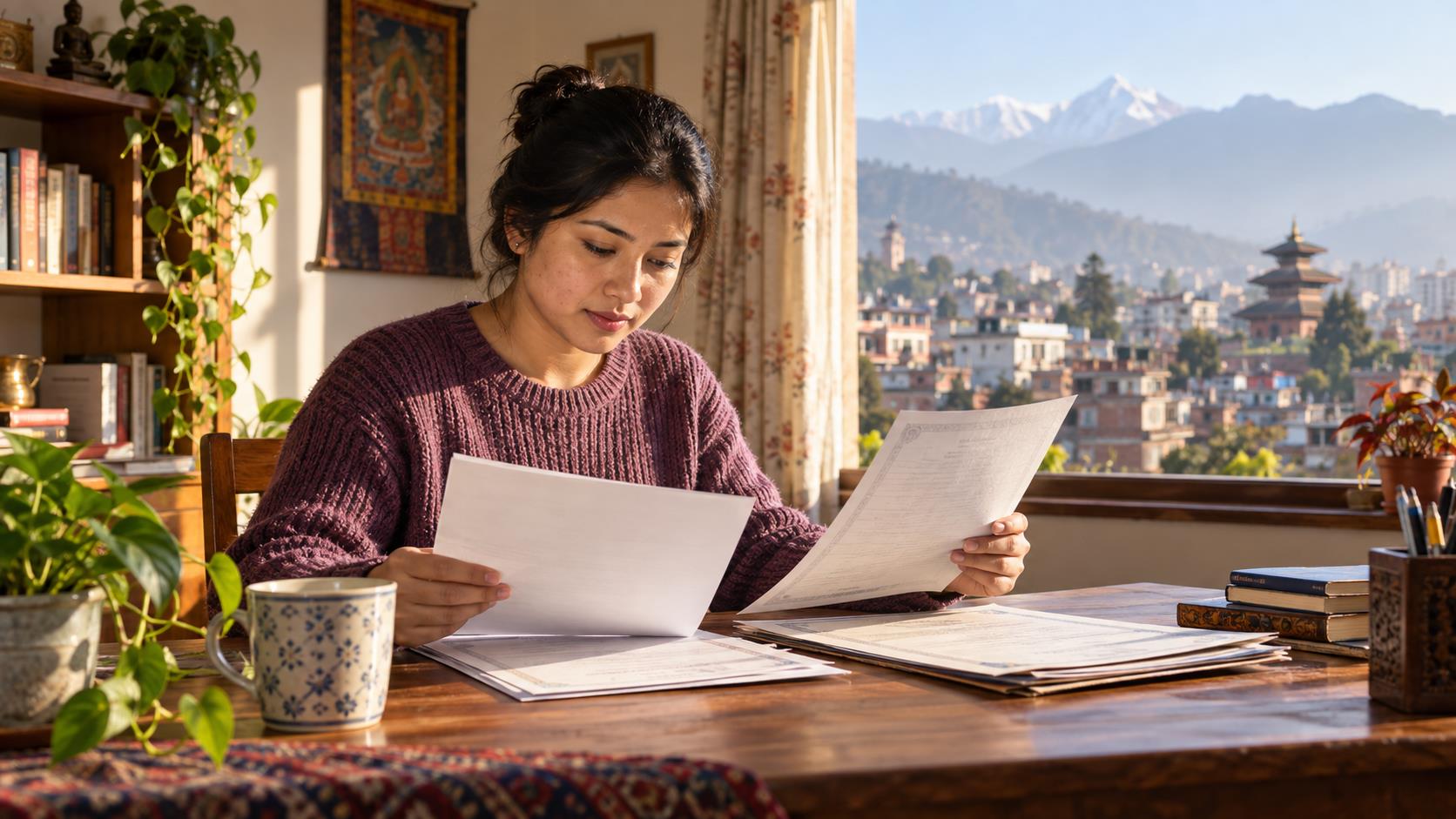
This English guide is for Nepal-born readers worldwide and people preparing a case at the U.S. Embassy in Kathmandu. GlobalVisora is an independent information website, not the U.S. government. Its featured image is an AI-generated conceptual scene, not a photograph of an applicant or official document. Rules and the issuance situation can change, so check the dated government guidance before committing money or travel plans.
What “from Nepal” means in the DV lottery
For Diversity Visa country eligibility, the usual starting point is place of birth, not citizenship, language or current address. A person born in Nepal who now lives in Australia or the United Arab Emirates does not normally switch to a different DV country merely by moving. Conversely, a Nepali citizen born in India or another country cannot assume Nepal is their DV country because they hold Nepali citizenship. Limited spouse- or parent-based chargeability exceptions exist, but each has specific conditions and must be supported if claimed.
The State Department’s DV-2026 selected-entrant information listed Nepal among participating countries; that is evidence for that program year, not a permanent promise. A new year’s country list may differ. Our DV Lottery requirements guide explains the birthplace and alternative-chargeability rules. Before making a new entry, compare your actual birth record with the country list published for the relevant cycle.
Know the current program stage, not a recycled date
At the September 2026 check, the State Department had said it would announce the opening of DV-2027 registration and the availability of its selection results. Do not reuse an old October entry date or a general May results date as if it were a confirmed schedule for this delayed cycle. Registration, result checking and visa issuance are three different stages. A person can be eligible to submit an entry yet still face a later issuance restriction.
For those already selected for DV-2026, timing is especially consequential: that program year’s visa entitlement ends September 30, 2026. The government says visa numbers may run out earlier, and selection itself reserves no visa. The current issuance pause creates a further constraint. Do not pay anyone who claims to bypass it, and do not make irreversible relocation plans based only on a selected result.
Education: do not assume every Nepal school certificate qualifies
The principal entrant must meet either the DV education route or the alternative work route. The education standard is successful completion of a formal elementary and secondary course comparable to a 12-year U.S. course of study. Nepal uses terms such as SEE, SLC, Grade 12 and +2, but a certificate’s name alone does not decide the U.S. standard. In particular, stopping at a lower-secondary milestone should not be treated as automatically meeting a completed 12-year course.
Review exactly which formal course you completed and keep records that show the years and final result. If the school changed names, grades or issuing authorities, retain enough evidence to connect the certificate to the actual course. A coaching-course certificate or a general equivalency claim is not a substitute for proving the rule. The consular officer evaluates the evidence in a real visa case; this article cannot pre-approve a Nepali qualification.
Only the principal entrant must meet the education-or-work condition. A spouse and children may have other immigrant-visa requirements, but they are not each required to prove their own qualifying high-school course or occupation solely because they are derivatives.
Work route: occupation matters more than job title
If you cannot establish the qualifying education, the alternative is at least two years of qualifying work experience within the previous five years in an occupation that requires at least two years of training or experience. The State Department uses U.S. occupational classifications to assess this. Simply working for two years in Nepal, working abroad or holding a managerial-sounding title is not enough by itself.
Compare the actual duties of your occupation with the government classification, then keep credible employment records showing dates, duties and employer details. For example, two people both called “supervisor” might perform very different tasks; the title alone cannot establish that the occupation meets the DV threshold. If the classification or evidence is uncertain, seek qualified advice before paying for a later visa application.
Check identity and family details before entry
Nepali documents may present names in an order that differs from a U.S. online form’s first, middle and last name fields. Prepare a consistent record of your name from your birth document, travel document and other records, then follow the form’s field labels carefully. Avoid switching family name and given name or silently shortening one document’s name. A genuine discrepancy may need explanation and supporting records later; changing an answer to fit a form is not a solution.
Also confirm the date of birth in the format the form requests. If your source record uses the Bikram Sambat calendar, check the Gregorian-date conversion against reliable identity records rather than guessing. Your place of birth is not your current residence or the location where you obtain a passport. These are different fields with different immigration purposes.
Review legal marital status and the children who must be listed under the current DV instructions, even if a family member does not plan to immigrate. A married couple may each make their own entry when each qualifies, but the required spouse and child details must be accurate in both. More than one entry for the same person in a registration period can disqualify that person. Keep personal control of the email address and confirmation record; a cybercafe or agent should not be the only person able to check the result.
If selected: Kathmandu is a separate stage
An entry is not a visa application, and a selected notification does not mean you have passed a document or admissibility review. A selectee who will interview in Nepal must follow the instructions for their own appointment and the U.S. Embassy Kathmandu’s immigrant-visa guidance. That guidance tells DV applicants to bring proof of a qualifying education or occupation as well as the printed appointment information from Entrant Status Check, and to follow the pre-interview and medical-exam directions.
Keep entry-stage items separate from interview-stage items. You do not need to buy a medical exam or pay an intermediary merely to submit a lottery entry. If selected and scheduled, use the embassy’s current checklist for your case, including civil records, translations where required and the official fee instruction. Fees paid for a visa application are not refunded merely because a person is later found ineligible. Our Entrant Status Check guide
Current DV issuance pause: what it changes
The State Department’s DV issuance update, last updated August 31, 2026, says applicants may continue to submit applications and attend scheduled interviews, but no Diversity Visas will be issued while the current pause applies. It says there are no exceptions under that guidance. The notice is program-wide, not a Nepal-only rule.
Do not confuse this pause with an earlier country-nationality pause: the Department separately reported that the prior pause affecting nationals of several countries, including Nepal, was no longer in effect after an August court order. That earlier change does not cancel the later, program-wide DV issuance pause. Because court orders and agency guidance can change, read the current notice again before an interview, payment or travel decision.
A practical Nepal-focused checklist
- Identify the DV program year and wait for its official registration notice and country list.
- Check your country of birth separately from citizenship and residence; document any claimed exception.
- Choose the education or qualifying-work route you can prove, not the one that sounds easier.
- Compare name order, birth date and birthplace across your Nepali records before entering data.
- Prepare truthful spouse and child details and compliant photos under the current instructions.
- Keep the confirmation number and email access yourself. Use the official status tool for results.
- If selected, review Kathmandu appointment instructions and the latest DV issuance notice before spending on the next stage.
The key distinction is simple: Nepal’s participation in one DV year, a person’s individual eligibility, selection in a drawing and actual visa issuance are four separate questions. Answer each using the correct year’s official rules and the government’s current processing guidance.