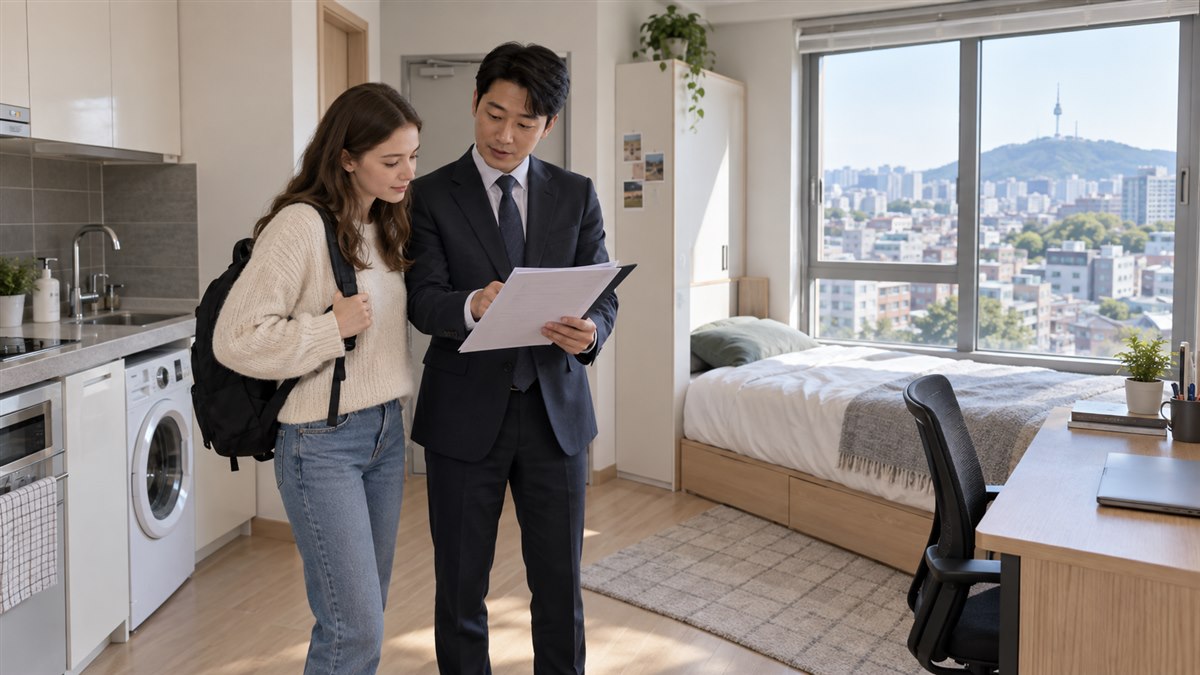
Last verified: September 9, 2026. A Korean “one-room” is a compact studio-style home where sleeping, cooking and living space are usually combined. It is a common off-campus option for international students, language trainees and new workers, but the unfamiliar deposit system can create expensive mistakes. This guide explains the rental terms, contract checks and immigration steps that many short housing summaries leave out.
Best safety rule: Never transfer a deposit only because an online listing looks attractive. Visit the property, verify the owner and registered rights, use a properly licensed real-estate agent when possible, and obtain a written contract.
One-room, wolse and jeonse explained
| Term | How it generally works | Main risk to check |
|---|---|---|
| One-room | A studio with space for sleeping, cooking and daily living | Size, legal use, furnishings and building condition |
| Wolse | An upfront refundable deposit plus monthly rent | Total monthly cost and deposit return |
| Jeonse | A much larger lump-sum deposit, usually without monthly rent | Owner debt, property value and deposit-recovery protection |
| Goshiwon | A very small furnished room, often with shared facilities | Fire safety, privacy and residence-registration eligibility |
| Dormitory | University-managed shared or private student accommodation | Application period, rules and limited availability |
Listings may use these terms loosely, so inspect the specific unit. Ask whether furniture, a washing machine, air conditioning, internet and cooking equipment are included. Korea’s official Study in Korea guidance notes that off-campus homes may be unfurnished and recommends checking the property in person rather than relying only on online information.
Calculate the real monthly cost
The advertised rent is only one part of the budget. Before comparing two rooms, record all of the following:
- refundable deposit;
- monthly rent;
- monthly management or maintenance fee;
- electricity, gas, water and internet;
- real-estate agent’s fee;
- furniture, bedding and appliances not included;
- moving costs; and
- commuting cost to the university or workplace.
A room farther from campus may have lower rent but a longer and more expensive commute. Compare the total for the entire contract, not only the monthly headline. Our guide to the real cost of studying abroad can help you build a complete budget.
Before signing: verify the property and owner
Korea’s Easy Law service recommends checking the certified real-estate register to confirm ownership and identify mortgages, lease rights or other claims. It also advises checking the building register for unauthorised construction. The person signing as landlord should match the registered owner. If an agent signs for the owner, verify the agent’s identity, power of attorney and supporting seal documentation.
Use this inspection checklist:
- Confirm the exact unit number and legal address.
- Test water pressure, hot water, heating, air conditioning and electrical outlets.
- Photograph existing damage, mould, leaks and appliance condition.
- Ask what the maintenance fee covers.
- Check mobile reception, internet availability and noise at different times.
- Confirm rubbish-disposal rules and parking or bicycle storage if needed.
- Ask whether the address can be used for foreign-resident registration.
- Verify the licensed broker’s registration rather than relying on a social-media profile.
What the written contract should state
The contract should identify the property and both parties, the deposit and payment schedule, monthly rent, management fee, contract dates and conditions for ending or renewing the lease. Record any promise—repairs, furniture, cleaning, pets or early termination—in the written special-terms section. A verbal promise is difficult to prove later.
Do not sign a contract you cannot understand. Ask the university’s international office, a trusted interpreter or a qualified adviser to review it. Keep the signed contract, payment receipts, listing screenshots, property photos and all messages.
Protecting your deposit after signing
Foreign residents can receive important protections when the required registration steps are completed. Korea’s Easy Law guidance says a foreign national tenant may be protected under the Housing Lease Protection Act after alien registration and reporting the change of residence. It advises taking possession and filing the change-of-residence report within 15 days. It also explains that obtaining a confirmed or “fixed” date on the lease can help establish priority for deposit repayment.
The exact procedure depends on your status and location. Ask the local community service centre, immigration office or HiKorea which documents you need. Complete the steps promptly; possession alone may not provide the same protection.
Red flags and rental scams
- A supposed landlord refuses an in-person or live-video inspection.
- The bank-account holder is unrelated to the verified owner or licensed agency.
- The price is far below comparable rooms and requires immediate payment.
- You are told registration at the address is impossible but given no clear legal reason.
- The owner or agent refuses to show the property register or identification.
- Large cash payments are requested without a signed receipt.
- The contract leaves the deposit, management fee or early-exit rules blank.
If anything does not match, pause the transaction. Losing a “special deal” is safer than losing a housing deposit.
Student housing timeline
- Before admission: compare university dormitory availability and neighbourhoods; do not commit before your study plans are confirmed.
- Four to eight weeks before moving: set a total budget and shortlist verified listings.
- During inspection: check the unit, owner, registered rights, included items and commute.
- At signing: obtain a complete written contract and receipts for every payment.
- On move-in: photograph the condition and check the inventory with the landlord or agent.
- After moving: complete address and residence reporting, and ask about a fixed date for the contract.
- Before moving out: give notice as required, document the final condition and agree on the deposit-return process in writing.
Frequently asked questions
Is a one-room always furnished?
No. Some units include major appliances and furniture, while others do not. List every included item in the contract or inventory.
Is wolse safer than jeonse?
They involve different cash-flow and deposit risks. Wolse often requires a smaller deposit but ongoing rent; jeonse can expose a much larger deposit. Neither removes the need to verify ownership, debt and contract protections.
Can an international student rent without an Alien Registration Card?
A landlord may offer a contract using a passport, but registration and protection steps can depend on your immigration documentation. Confirm the process with your university and local immigration authority before paying.
Official sources
- Study in Korea — Living and Housing Information
- Easy Law — Lease Agreements and Protection
- HiKorea — Immigration and Residence Services
This article provides general information, not legal or financial advice. Rental law, local practice and immigration procedures can change. Verify the property and obtain qualified help for a high-value deposit.