Prepared and reviewed by: GlobalVisora Editorial Team
Last reviewed: September 10, 2026
Verification scope: Japan visa exemption, eVisa availability and the New Chitose–Sapporo transfer information were checked against Japan MOFA and Hokkaido’s official tourism guidance linked below.
Next review due: December 2026, or earlier if Japan changes its entry or eVisa rules.
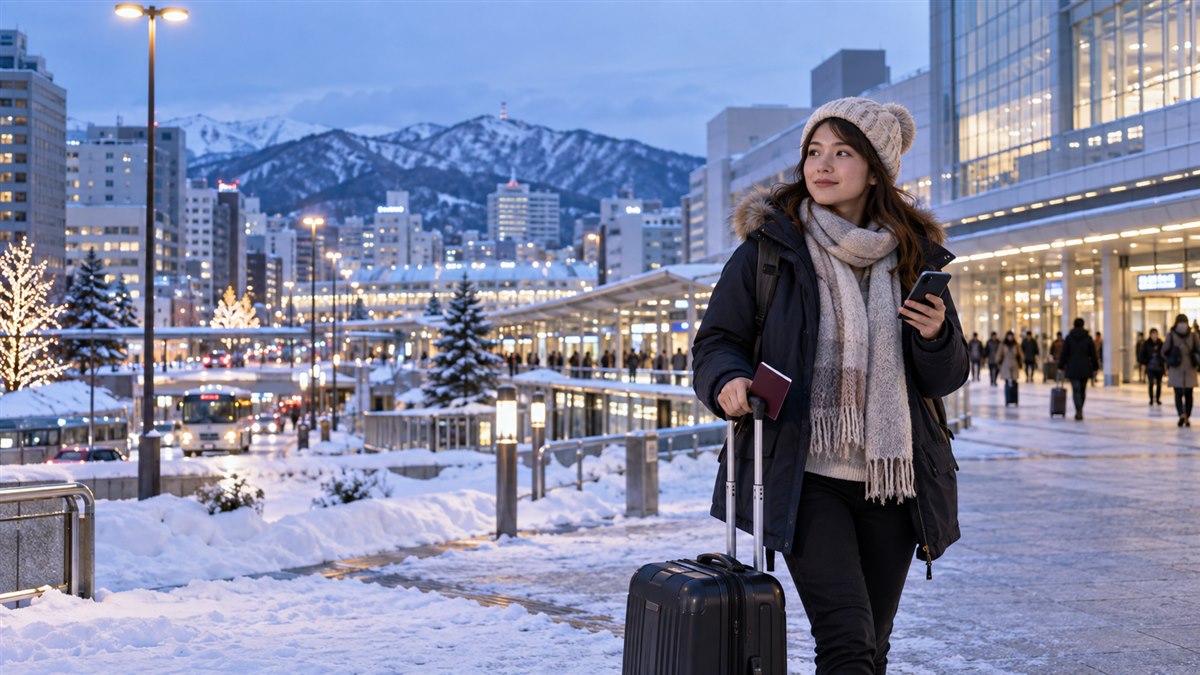
Sapporo is a major winter destination in Hokkaido, but a smooth trip requires more than booking a snow-season hotel. Travellers should confirm Japan visa or visa-exemption rules, distinguish New Chitose Airport from smaller local airports, prepare for winter disruption and pack for icy streets rather than temperature alone.
Quick plan: Check your Japan entry route first, fly into New Chitose Airport for most international itineraries, allow flexibility for snow and use the JR airport service or another official transport option to reach Sapporo.
Do you need a Japan visa?
Visa requirements depend on nationality, place of residence, purpose and length of stay. Japan maintains a list of short-stay visa-exempt passports. Travellers who are not exempt may need a temporary visitor visa, and some residents can use Japan’s online eVisa system for eligible short-term tourism.
An eVisa is not universal and a visa or eVisa does not guarantee entry. Work, paid activity or long-term study requires the appropriate route. Use our detailed Japan eVisa eligibility and document guide, then confirm the latest position with Japan’s Ministry of Foreign Affairs and the mission serving your residence.
Japan entry-document checklist
- valid passport and applicable visa or eVisa evidence;
- return or onward booking;
- first accommodation address and contact details;
- travel itinerary and proof of funds where relevant;
- travel insurance details;
- prescriptions for essential medication; and
- copies stored separately from the originals.
Keep documents consistent with the purpose stated in the application. Do not assume a ski trip, conference, family visit and paid seasonal job use the same immigration route.
New Chitose Airport to Sapporo
New Chitose Airport (CTS) is Hokkaido’s principal air gateway and has a direct rail station. Hokkaido’s official tourism site describes the JR Rapid Airport journey to Sapporo at roughly 40 minutes under normal conditions. Schedules and travel times can change during severe weather, maintenance or peak periods.
Alternative options may include airport buses, taxis and rental cars. For most first-time winter visitors, the train avoids unfamiliar snow driving. Check the last service if arriving late, and allow time for immigration, baggage and customs before committing to a connection.
Winter clothing and footwear
- insulated coat with wind protection;
- thermal base layer and warm mid-layer;
- water-resistant boots with strong winter traction;
- warm socks, gloves, hat and neck protection;
- removable traction grips if appropriate; and
- a small waterproof cover for passport and electronics.
Sapporo pavements can be icy even when snow is not actively falling. Take shorter steps, keep hands free where possible and avoid smooth-soled fashion shoes. Indoor spaces and public transport are heated, so layers are more practical than one garment that cannot be adjusted.
Planning for snow disruption
- Check official weather, airport, JR and local transport updates.
- Leave buffer time before flights and long-distance trains.
- Keep medicine, chargers and one warm layer in carry-on baggage.
- Know the change and cancellation terms for hotels and activities.
- Avoid a separate non-protected ticket immediately after an international arrival.
- Keep offline maps and the accommodation address in Japanese.
Getting around Sapporo
Subway travel is useful during heavy snow because much of the central journey is protected from outdoor conditions. JR trains, buses and taxis cover other areas, while underground walkways connect important central locations. If using an IC card, still check whether a particular regional or reserved service needs a separate ticket.
Walking times shown in map apps may be unrealistic during snowfall or on icy paths. A hotel near a subway entrance can reduce daily exposure and luggage difficulty.
Accommodation checks
- distance from the nearest station entrance, not just straight-line distance;
- late check-in procedure if a flight is delayed;
- luggage storage before or after check-in;
- heating and room ventilation;
- cancellation terms during transport disruption; and
- whether access involves steep or uncleared paths.
Common mistakes
- Assuming Japan eVisa is available to every traveller.
- Confusing New Chitose Airport with another Hokkaido airport.
- Planning a tight airport-to-activity connection during snow season.
- Wearing warm but non-grip footwear.
- Booking a distant property without checking winter station access.
- Using a tourist status for paid work.
Frequently asked questions
Which airport is best for Sapporo?
Most international and major domestic travellers use New Chitose Airport (CTS), which has direct rail access toward Sapporo.
Can snow cancel trains and flights?
Yes. Hokkaido transport is designed for winter, but severe conditions can still cause delays or cancellations. Monitor official operators and keep itinerary buffers.
Can I work during a winter trip on a tourist visa?
Ordinary paid employment is not authorised by a short-term tourist route. Obtain the correct status before working.
Official sources
- Japan MOFA — Short-Stay Visa Exemptions
- Japan MOFA — Japan eVisa
- Hokkaido Official Tourism Site — New Chitose and Sapporo Winter Route
GlobalVisora is independent and is not affiliated with the Japanese government, Hokkaido tourism authorities or transport operators. Verify current visa, weather and transport information before travel.