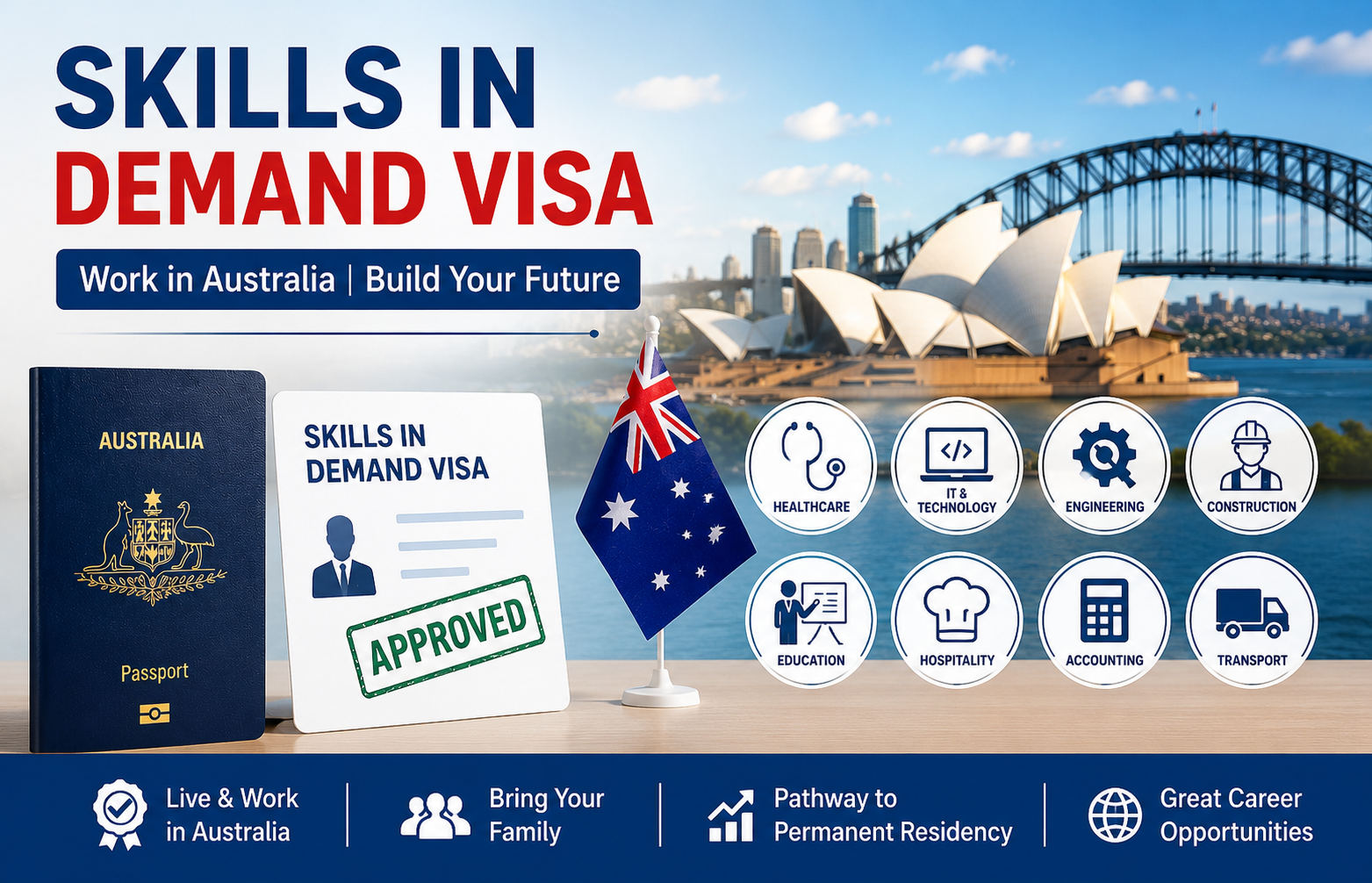
Australia does not have one universal work visa. The right option depends on your passport, occupation, qualifications, work history, English ability, age, location and whether an Australian employer will sponsor you. Some pathways are temporary and tied to a particular job; others are points-tested or may lead toward permanent residence. A visa label alone does not tell you what work you can do: the conditions attached to your own visa matter.
Sources checked October 13, 2026. Immigration rules, occupation lists, fees and program settings can change. Treat this as a route-selection guide, then check the current official requirements for your circumstances before paying a fee, accepting a job or lodging an application.
Start by identifying the kind of work route you need
Begin with your situation: do you have a genuine Australian job offer and a sponsor, qualify through skilled migration, meet a working-holiday program, or qualify as a recent graduate? Each route has different criteria. A job offer alone does not establish visa eligibility, and an expression of interest is neither a job application nor permission to work.
Employer-sponsored options
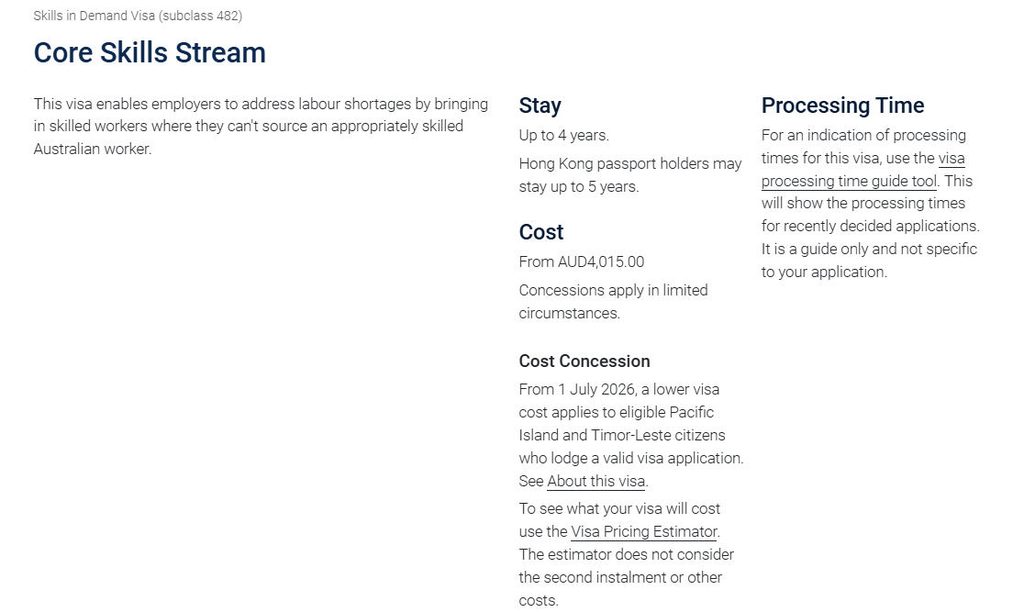
Skills in Demand visa (subclass 482)
The Skills in Demand (SID) visa is a temporary employer-sponsored route for a nominated position. It replaced the former Temporary Skill Shortage visa framework. In general, an Australian employer must be an approved sponsor or have the required labour-agreement arrangement, nominate a genuine role, and meet sponsorship obligations. The applicant must satisfy the criteria for the relevant stream, including applicable occupation, skills, work-experience, English, health and character requirements.
Eligibility depends on the role’s actual duties, nominated occupation, employer and stream. Work may be limited by visa conditions. Check the grant notice rather than relying on a recruiter’s summary; a promised salary or job title does not guarantee approval.
Employer Nomination Scheme (subclass 186)
Subclass 186 is a permanent employer-sponsored visa with different streams, including Temporary Residence Transition and Direct Entry. The requirements depend on the stream and may involve an employer nomination, occupation and skill requirements, work experience, age and English criteria, as well as health and character checks. A person already working in Australia on a sponsored visa should not assume that time in the job automatically creates a right to permanent residence. The employer, role and applicant must meet the applicable criteria when the relevant steps are taken.
Direct Entry and Temporary Residence Transition are not interchangeable. Check which stream fits your history and whether an exemption applies. A temporary visa does not promise a later subclass 186 grant.
Skilled Employer Sponsored Regional visa (subclass 494)
Subclass 494 is a provisional employer-sponsored option for eligible regional employment. The employer, nominated role, occupation, skills, experience, English and other criteria must meet the subclass rules. Confirm that the actual worksite is in a designated regional area; “regional” has a specific migration meaning, not simply “remote.” The visa may offer a later permanent pathway to eligible applicants, but that outcome is not guaranteed.
Points-tested skilled migration
The principal points-tested skilled options include Skilled Independent (subclass 189), Skilled Nominated (subclass 190) and Skilled Work Regional (Provisional) (subclass 491). These routes may suit people whose occupation, qualifications and experience fit the applicable skilled-migration settings. Depending on the visa, an applicant may need an eligible occupation, a suitable skills assessment, English evidence, an expression of interest (EOI) through SkillSelect and an invitation or nomination.
The subclasses are not equivalent. The 189 is an independent skilled route; the 190 requires state or territory nomination and is permanent; the 491 is provisional and linked to regional living and work conditions, with nomination or eligible family sponsorship. Check the particular visa’s rules and obligations before choosing based only on a points estimate.
For the 189, 190 and 491 pathways, the Department’s current SkillSelect guidance sets a minimum points threshold of 65. That threshold is not a promise of invitation. Points may reflect factors such as age, English, qualifications and work experience, while the number and timing of invitations depend on program settings and competition. A state or territory nomination can have its own criteria and selection process. A 491 applicant may instead be sponsored by an eligible family member in a designated regional area, if the relevant requirements are met.
An EOI is not a visa application or permission to work. If invited, you must lodge a visa application within the stated period and support your claims with evidence. Skills assessments, occupation lists and points calculations have separate rules; the assessing authority depends on the occupation.
Other temporary work-related pathways
Working Holiday and Work and Holiday visas
The Working Holiday (417) and Work and Holiday (462) visas serve eligible young adults from participating countries. Passport eligibility, age limits and application requirements differ; some programs also have education, English or government-support criteria. These visas are for a holiday with short-term work, not a general skilled-migration route. Check the rules for your passport.
Temporary Graduate visa and training routes
The Temporary Graduate visa (485) may be available to eligible international graduates after qualifying Australian study. It is not an automatic student-visa extension; check the current stream, age, qualification, timing and duration criteria. The Training visa (407) covers eligible workplace training or professional development, not ordinary employment. Other temporary activity visas are similarly purpose-specific. A visitor visa does not authorize work.
Compare the routes before you commit
| Your situation | Routes to investigate | Key question |
|---|---|---|
| An Australian employer wants to hire and sponsor you | Subclass 482, 186 or 494, depending on role and location | Can this employer nominate this genuine position under the right stream? |
| You qualify through occupation, skills and points | Subclass 189, 190 or 491 | Is your occupation eligible, and can you meet assessment, points and invitation requirements? |
| You are an eligible young traveller seeking temporary work | Subclass 417 or 462 | Does your passport qualify, and do you meet that program’s current conditions? |
| You recently completed qualifying Australian study | Subclass 485, if eligible | Do your course, application timing and personal circumstances meet the current rules? |
| You are coming for structured workplace training | Subclass 407, if eligible | Is the activity genuine training rather than ordinary paid employment? |
Use this as a starting point only. Criteria change, and the detailed subclass rules determine which route fits. The official Visa Finder can help narrow options.
A practical application-planning checklist
- Define the work: Note the occupation, duties, employer, location and expected duration.
- Check the exact pathway: Confirm the subclass, stream and any sponsor, nomination, state invitation or family-sponsorship requirement. Do not select a visa from a social-media post or a similarly named job listing.
- Match evidence to criteria: Gather passport details, qualifications, employment references, licences, English results and skills-assessment evidence where required. References should confirm real duties and dates.
- Check timing and status: Review where you must be when applying or when a decision is made, and what status you must maintain. A pending application may not grant work rights.
- Read conditions and costs: Confirm duration, work restrictions, family rules, fees and separate assessment or testing costs using current official information.
- Keep records: Save the lodged application, supporting documents, payment receipt, employer communications and visa grant notice. Check the actual conditions attached to the grant before starting work.
Protect yourself from sponsorship and recruitment scams
Be wary of guaranteed-visa promises, unexplained job fees, requests to misstate experience or demands to surrender your passport. No payment or job offer compels approval. Get the employer’s legal name, role, location, proposed subclass and a written explanation of costs, then verify them independently.
For sponsored routes, distinguish the visa applicant’s costs from sponsorship or nomination expenses that may be the employer’s responsibility. Do not agree to repay a cost simply because a recruiter says it is standard; check official employer obligations and get independent advice where needed.
For complex cases, consult a registered migration agent or Australian legal practitioner and verify their credentials. Social-media comments and guarantees are not substitutes for current official requirements.
Where to verify current requirements
For an employer-sponsored or other temporary-work route, start with the Department of Home Affairs’ temporary work visa options page and follow the link to the exact subclass. For points-tested visas, review the Department’s SkillSelect expression-of-interest guidance, occupation-list links and the specific visa page. These official pages, your visa grant conditions and any formal request from the Department take precedence over this overview.
If you are comparing study and work routes, see our Australia Student Visa Subclass 500 guide. A student visa is not itself a general work-visa pathway; check its conditions and the separate criteria for any later visa.
GlobalVisora is an independent information site, not an Australian government agency or migration-law firm. This article is general information, not personal legal advice. Always verify current eligibility and conditions with the Department of Home Affairs before acting.