
Australian visa fees are not one flat price. The amount depends on the visa subclass and stream, when Home Affairs receives the application, applicant location, lodgement method and who is included. Charges are in Australian dollars (AUD) and can change. Before lodging, check the Department’s current pricing information and estimator for your circumstances.
What does the visa application charge include?
The visa application charge (VAC) is the government charge for a visa application. Depending on the subclass and your circumstances, the first instalment may include a base charge, additional-applicant charges, a non-internet charge for some paper applications, or a subsequent temporary application charge for certain onshore applications. Some charges may be nil or an exemption may apply.
Some visas also have a second instalment, payable before grant if required. The estimator is not a final invoice and may not include it; check the pricing-table notes and any Department payment request.
Why two applicants may see different totals
Start with the exact subclass and stream: similar visa names can have different charges. Check where each applicant will be when lodging, because some charges depend on whether the applicant is inside or outside Australia. The application method can also matter; a non-internet charge applies only to some subclasses and circumstances.
Family composition and previous visa history can affect the total. Combined applications may have additional-applicant charges that vary by age and visa type, and certain onshore applications may attract a subsequent temporary application charge. Do not count every listed family member as a visa applicant. Eligible citizens of specified Pacific Island countries, Timor-Leste and ASEAN member countries may receive lower pricing for some visas. Read the relevant table notes; do not assume a charge or concession applies.
If you are comparing study and other routes, see our Australia Student Visa Subclass 500 guide to confirm that you are checking the fee for the right visa category.
How to check the correct fee
- Confirm the visa subclass and, where relevant, the stream that matches your purpose.
- Note each applicant’s location at lodgement, age, and whether they are applying together.
- Open the Department’s current visa pricing information. Select the correct category and read the full row, footnotes and explanatory notes.
- Use the Visa Pricing Estimator linked from that page. Enter the visa, stream, passport country, intended lodgement date, online-lodgement choice, location and additional applicants accurately.
- Compare the estimate with the pricing table. Before submitting, review the amount shown in ImmiAccount and keep the payment confirmation.
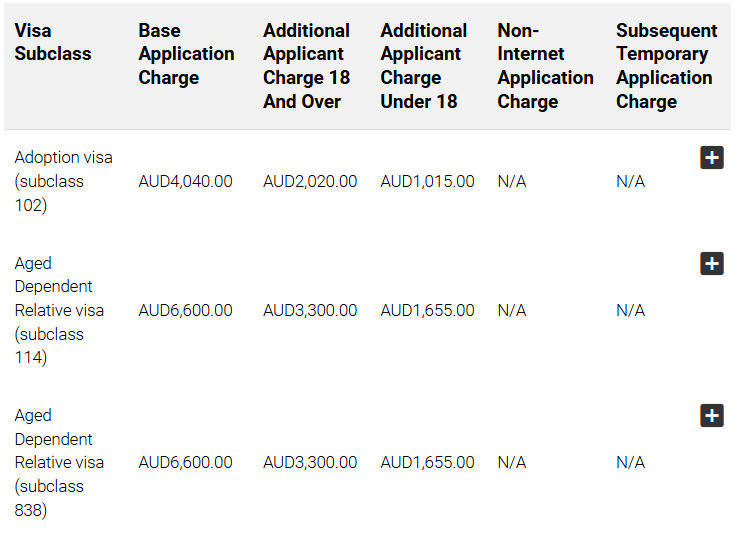
The estimator is a planning aid, not a final invoice or eligibility decision. It relies on accurate answers and may not show a second instalment. If a charge or exemption is unclear, check the Department’s notes or seek qualified advice.
Budget for costs outside the VAC
The VAC is only one possible cost. Depending on the visa, budget separately for required health examinations, police certificates or biometrics, plus any needed translations, English tests, skills assessments or professional advice. Students may also face education-provider costs; a tuition deposit is not the visa application charge. Check what your route actually requires before paying for a service.
Keep Home Affairs charges separate from bank or card-provider costs. From 1 October 2026, the Department says it stopped applying its own surcharge to card, PayPal and UnionPay payments. Your bank or card issuer may still set separate foreign-currency conversion or international-transaction fees under your account terms. Check with that provider and make sure your payment method can cover the amount in AUD.
When is the amount determined?
Fees can change, and the applicable amount may depend on when Home Affairs receives the application. If a price increase takes effect between lodgement and receipt, the newer charge may apply. A saved ImmiAccount form is not a received application, so recheck the fee just before submitting.
Common fee mistakes to avoid
- Using an amount from an old blog, social post or screenshot instead of the current government table.
- Choosing a similar but incorrect subclass or stream in the estimator.
- Forgetting family applicants, age, location or a possible second instalment.
- Counting medical, translation, test or advice costs as part of the VAC.
- Assuming a concession applies without checking eligibility.
- Confusing a bank’s conversion fee with a Home Affairs charge.
Confirm the route, read the table notes and use accurate details. Recheck the amount immediately before lodgement.
Sources checked: October 13, 2026. Fees and payment settings can change; the Department’s current information controls. For current payment-surcharge information, see Home Affairs’ surcharge guidance.